Friday, February 1, 2013

TWO DIFFERENT SUBJECTS

Other than the alliteration there is no connection between Solar (the conversion of the sun's rays into electrical power) and Shakespeare (the greatest writer--in any language--of all time) save that I have an interest in these subjects. I have studied literature most of my life and I have been working with Solar Photovoltaic for the past seven years. Take a look at the article "Sun and Shakespeare" in Home Power Magazine Issue #90 Aug./Sept. 2002. So how am I going to combine these two subject in an interesting and informative post? I do not know. With readers' input I can only try and see what happens.

Retirement from Shakespeare Springs Utilities

Upon the event of the retirement of Henry LeRoy--Prometheus is free.

The Charles Dickinson novel, “A Tale of Two Cities,” starts with this line: “It was the best of times; it was the worst of times.” This could also start the story of my career at Prospero Power Plant. I will remember the best of times and forget the coal dust, the fly ash, the heat, the cold.

I will remember the times when operators, mechanics, electricians, I &C, management, admin, building services, engineering, planning, and stores all came together to solve a problem. Or those start-ups that, because of teamwork, went on without any problems and the generator breaker was closed in and load was dispatched when requested.

Then the bosses tell you “good job.”

I will remember those long nights when the machines would operate without a hitch. We would arm ourselves against the siren of sleep with stories and even though we had told each other the same story a hundred times before, we all still listened because it was a well told tale.

I will remember the funny hour--usually around 4 o’clock in the morning of the fourth nightshift—when everything anybody said seemed funny and we would laugh and get through another shift.

Some of us remember people like Bottom the Weaver and the late John Falstaff they were both such characters that we smile when we think of them.

My wife Diane and my son Reed will remember that I always came home safe.

I will remember summer nights--the plant being so un-godly hot I would go out on the roof to catch some cooling air and see the city lights. Those shining lights always inspired me. Because of what we do here, our city’s lights glow across the horizon.

Because of the power Prospero Plant generates, people are eating hot meals. They are reading and writing, watching television and computing. They will be having parties, listening to music, singing and dancing. Babies are being born and someone will be dying.

The design of a power plant is to burn coal to make steam to make electricity. The goal of all the men and women who work at Prospero Plant is to bring light to the city of Shakespeare Springs. That is the important job that you all do.

I thank the operators that I supervised. Bedford and Exeter, Warwick and Talbot, Salisbury and Gloucester, Be in their flowing cups freshly remember'd.

Our goal was to generate safe, clean and economical electrical power. I like to think that we did some good towards that end, and if we did it was because of their hard work.

I will remember those who were with me during the best of times and those that stood by me in the worst of time. I will remember all of you warmly.

After nearly 21 years working for Shakespeare Springs Utilities at Prospero Power Plant, I can say that the last two years have been the Best of Times.

Adios, good luck, Prometheus is free.
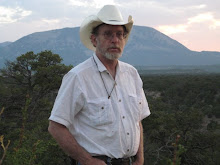
Why Solar?

When I speak of solar I speak of power,
Of atomic actors on a silicon stage.
Electric power produced on photovoltaic panels.

The panels take the sun for fuel and convert it to electricity—bringing light to a dark world.

No different in its purposes than the coal fired power plant where the sons and daughters of Prometheus combine the elementary elements--earth, wind and fire—to bring light to a dark world.

I believe that photovoltaic power systems are the safest, cleanest and most economical way to generate electrical energy.

Shakespeare Springs Sustained Solar Development Project (Part I)


Shakespeare Springs is a fairy tale--it is a mid-size city on the Front Range of the Rocky Mountains. The City is powered by two coal fired power plants and two modern hydro-generating stations. Here is a plan for it future power needs.

Part 2  http://sundogpt.blogspot.com/2009/08/shakespeare-springs-sustained-solar.html
Part 3  http://sundogpt.blogspot.com/2010/01/four-dominant-factors-that-will-have.html


The sun is shining--shining 1000w/m2 of full sun power on Shakespeare Springs. One large solar photovoltaic array could collect this energy and supply a city’s electric needs. This could be viewed as environmentally friendly; however it would only create another eggs-in-one-basket energy system, requiring many acres of undeveloped land and leaving useless the great generating system that helped build this community.

Still, a Sustained Solar Development Project can give citizen safe, clean and economical electrical generation. Solar development will give value, improve customer relations and contribute to the community

A Utility InterActive PhotoVoltaic solar grid could be built on the many acres on south-facing rooftops on residential and commercial buildings across this city. These systems could be co-owned by Shakespeare Springs Utilities with home and business owners. It has been shown that a residential site UIA PV system will return a minimum of 30% of its daily generation to the grid. (Strong and Scheller 1993). Larger Utility-Scale Photovoltaics can also be part of this distributed system. A Utility-Scale Generating PV station will send all its power to the grid.

Utility Interactive Photovoltaic Systems include panels, inverter, distribution panel and a meter. No batteries needed. The panels and inverter supply and control power to the home. When excess power exists it is sent to the grid. During low sun conditions or during high demand periods grid electricity is taken into the home

A 2.5 kW Utility Interactive Photovoltaic will generate 13 kW a day. During daylight hours, generally peak demand times, the UIA PV system will be putting power on the grid. A common configuration for this machine can consist of 24, 120w PV panels and a 2.5 kW utility interactive inverter. The UI inverter turns the DC voltage of the panel into AC voltage and conditions it to synchronize with and match the power quality of the grid.

A Net Metering device is essential; this allows electricity flowing to and from the grid to be metered. The meter must be able to measure power in and out thus allowing the UIA PV Partner to be paid for the power that is put on the grid. To receive maximum power from this machine, it would need 300 sq. /ft of rooftop oriented within 14 degrees east or west of south and get 5.5 sun hours a day. Wiring components, mounting bracket and safety equipment are needed in the complete system for a total cost of $30,000.

The citizen of Shakespeare Springs will benefit greatly from a project of Sustained Solar Development, a program with annual goals in which a set amount of UIA PV generation goes online each year. As the return of investment is realized on earlier systems money will be freed up for more solar development. A ten-year development program should easily yield 10 mw of generation. This will supply over 30,000 energy-efficient homes and small businesses
.


Part 2 http://sundogpt.blogspot.com/2009/08/shakespeare-springs-sustained-solar.html

Part 3 http://sundogpt.blogspot.com/2010/01/four-dominant-factors-that-will-have.html


More Solar Energy information

Sunday, January 1, 2012

I'm Henry V I am!

Shakespeare Reading Challenge

First let me thank Elena at  http://shakespearereadingchallenge.blogspot.com/2010/11/shakespeare-reading-challenge-2011.html   for hosting this reading adventure.  I enjoyed reading and watching the plays . Let's see how I did.  This was the reading challenge and rules.
1. Puck: Read 4 plays over the year, 1 of which may be replaced by a performance
2. Desdemona: Read 6 plays, 2 of which may be replaced by a performance
3. Henry V: Read 12 plays, 3 of which may be replaced by a performance
Now, the Rules:
1. All plays must be read between January 1, 2011 and December 31, 2011. Anything begun before that cannot be included.
2. Audio versions are also acceptable but all plays must be unabridged.
3. You don't need to list your plays ahead of time but you may, if you'd like.
4. Review pages for each month will be created but are optional.


I read:


Two  Gentlemen of Verona

The Two Noble Kinsmen

King John

Measure for Measure

Timon of Athens

Pericles Prince of Tyre

The Life of Henry VIII

King Richard II

The Tragedy of Coriolanus


And viewed;


King Henry  as an online you tube video mash–up of available clips from the Branagh and Olivier films. I liked the Branagh film for its rousing score and its realistic  battle  scenes.  I liked the Olivier film for the historical portrayal of the Elizabethan stage at the start of the film.


Romeo and Juliet at Adams State College,  Alamosa, Colorado

The Merchant of Venice at Theatreworks, Colorado Springs, Colorado


That is 12 works--I am a Henry V and a  member of a band of brothers and sisters that joined with me in this merry challenge. I enjoyed all the reading but I truly think I get the most from seeing a play or movie.  The conceit that I take from  these plays  are  that they were written for all seasons  This is why when  Adams State’s performance  of Romeo and Juliet has the actors in modern street dress--riding skateboards and fighting with chains and knives-- the contemporary set design works because the story of young forbidden love is truly a timeless tale.  In the history plays you see kings fall because of taxes and in Coriolanus we see the Occupy Movement in the Roman citizens taking it to the streets. And in Measure for Measure we see a corrupted government telling people how to live their private lives.


We see sitcoms in Two Noble Kinsmen and Two Gentlemen of Verona and in  Pericles we have a latter-day action hero. I believe that Shakespeare is the beginning of modern writing and that his works will always exist throughout all time.


Congratulations to all those who met their Shakespeare Reading Challenge goal.

Tuesday, October 4, 2011

Why Shakespeare?

In as much that literary criticism is an art and not a science, then the statement -- Shakespeare is the greatest writer of all history -- can be said to be a subject fact. Among the urban literary critics of today it is often fashionable to say that Shakespeare is just a dead old white man who no longer has anything to say. I would disagree with this theory. It can be shown that no other writer has informed what we are as Americans and really all the peoples of this planet. Or as Harold Bloom wrote in his book, The Invention of the Human Being,We need to exert ourselves and read Shakespeare as strenuously as we can, while knowing that his plays will read us more energetically still.”

When we think of young love we think of Romeo and Juliet.

In his inaugural speech President Obama said, “this winter of our hardship." Shakespeare had Richard III say in his opening lines, "Now is the winter of our discontent." President Obama is educated in Western thought and he would know this line and he used it the same way Shakespeare used it.

Now is the winter of our discontent
Made glorious summer by this sun of York;

The House of York has regained the throne. The House of York is now the shining sun. Long live the King. President Obama and the Democrats are bringing warmth to the dark cold season of the Bush administration. A historian or future playwright will speak to the validity of this allusion.

So again. Why Shakespeare? Because--if we know Shakespeare then we can understand what motivates people.

If we read Macbeth, Richard III or Henry the VI then we can understand the evil of corrupt and weak governments.

In watching Henry V we will see the duality of war in our culture and understand that it is both heroic and devastating. We can gain knowledge of leadership and motivate ourselves and others to higher goals. “Once more into the breach, dear friend, once more, or close the wall up with our English dead.”

Our role in nature from As You Like It--“and this our life, exempt from public haunts, finds tongues in trees, books in running brooks, sermons in stones, and good in everything.”

How we relate to race and religion can be seen in Othello and The Merchant of Venice.

And I will say in Shakespeare’s plays the battle of the sexes was fairly fought and not always won by a man.

Perhaps as in the last words of Prospero from The Tempest, “let your indulgence set me free.” If it is time to set the old guard free, then let that last old dead white man that you listen to be Shakespeare--hold on to him as long as you can.

Monday, January 10, 2011

Shakespeare Reading Challenge 2011

I am part of the Shakespeare Reading Challenge  2011 being hosted by Elena
at 
http://shakespearereadingchallenge.blogspot.com/2010/11/shakespeare-reading-challenge-2011.html here are the reviews of my reading  challenge.


For February I read “The Two Gentlemen of Verona” and the “Tragedy of Coriolanus,”  I like both plays.  I think that the people involved, both the government and opposition, in the recent uprisings in Africa and Middle East would be well served to read Coriolanus and learn from it

Measure For Measure
“Measure for Measure” gives credence to the Ben Johnson quote that Shakespeare “was not for an age, but for all time.”   It is a play about a government becoming involved in the personal lives of its citizens, which is also a critical discussion in America today. I cannot help but believe that like Angelo, the villain of the play,  America’s leaders are not willing to follow the laws that they make.
As an aside,  I was reading “Measure for Measure” on my Barnes and Noble Nook (a digital reader) when it broke.  While waiting for it to be repaired I have finished reading the play on a very old leather-bound copy of the completed works.  I found that when reading the book it was easier to go back and forth through the play. It is nice when you cannot remember a character to just flip to the start and review the Dramatis Personae.  I also find that the feeling of a book creates a better reading experience. But with my Nook I can carry all of Shakespeare plus hundreds of other writers in my hand.  Also the old book fell apart as I read it but unlike my Nook, I can repair the loose pages and binding  with ot sending it off for repair.
Pericles, Prince of Tyre
I have read all but a few of Shakespeare’s plays and this play is one.  I would say, as one of Shakespeare’s later works, that it is not his best as proven by how little this play is performed.  It is melodramatic. The hero of the play Pericles, gives the control of his life to the fates, unlike Shakespeare’s heroic figures such as Henry V  or the tragic hero Macbeth.  For good or bad, these
characters struggle against the problems they find themselves in, even if they created the problem to start with.
Two of the plays roles mimic characters from Shakespeare’s earlier works, Henry V’s chorus becomes Gower  and Lady Macbeth becomes Dionyza but with much less success.  The poetry at times is good but generally it seems to be composed of the  most convenient rhymes only to trudge the play forward, not to create the scintillating language that we read in other plays.  The play, it seems to me, was written just to make a little money.  surmise that the play was written by another playwright and that Shakespeare only added his name and a little polish.
However, I would very much like to see the play just  to see how the sailing ship sets are built and how the storm scenes are performed.
My next reading
will be Two Gentlemen of Verona